
Showing posts with label Tools of the Trade. Show all posts
Showing posts with label Tools of the Trade. Show all posts
Wednesday, August 8, 2012
Tools of the Trade
Pigment, with which one can make watercolors, oils, egg tempera, etc. Also, I think this is the last Tools of the Trade.


Wednesday, August 1, 2012
Tools of the Trade


Tuesday, July 24, 2012
Tools of the Trade
Pens and nibs, I don't use them much but they can offer a wide range of line qualities, also mine are dirty...


Wednesday, July 18, 2012
Tools of the Trade

Wednesday, July 11, 2012
Tools of the Trade


Tuesday, July 3, 2012
Tools of the Trade

This weeks tool is a kneadable eraser. They're great for working with charcoal because you can make them into whatever shape you need and when they get dirty you can clean them by kneading them.

Wednesday, June 27, 2012
Tools of the Trade
Charcoal pencils are this weeks tool. They work essentially like conte crayon but in pencil form.
 Like drawing pencils, charcoal pencils also have different grades of hardness or softness. Also they have white charcoal pencils.
 Charcoal pencils are probably better for smaller areas or more detailed work and you could use charcoal sticks or conte crayon for the rest.
PS

On view at the Eccles Community Art Center July 2nd through September 1st.


PS

watercolor
9x9in
2011
On view at the Eccles Community Art Center July 2nd through September 1st.
Wednesday, June 20, 2012
Tools of the Trade
This week's tool, my geometry compass. As I've mentioned and posted about before, I have multiple compasses, the geometry compass is one of my favorites though. The cause for my favoritism is it's extreme usefulness.

Unlike my other compasses, my geometry compass came with several extras or tools. The extender bar is wonderful, sadly there is a limit to the diameter of circles you can make with a compass, it's incredibly frustrating to find yourself just short of what you need, with the extender bar, rather than having to find and buy a bigger compass (not a easy feat), you can use the bar to extend your compasses reach.

 Another useful item is the converter that lets you use a regular pencil or pen as the drawing point for your compass.


Lastly, it comes with a spare compass lead which is just nice, I do have a pack of compass leads but I don't know how readily available they are.


Unlike my other compasses, my geometry compass came with several extras or tools. The extender bar is wonderful, sadly there is a limit to the diameter of circles you can make with a compass, it's incredibly frustrating to find yourself just short of what you need, with the extender bar, rather than having to find and buy a bigger compass (not a easy feat), you can use the bar to extend your compasses reach.


Lastly, it comes with a spare compass lead which is just nice, I do have a pack of compass leads but I don't know how readily available they are.

Wednesday, June 13, 2012
Tools of the Trade

Wednesday, June 6, 2012
Tools of the Trade
Conté crayon, conte crayon is like charcoal but in compressed stick form, I kind of like it better than charcoal, however stick form is not the easiest to draw with until you get to more of a point...I don't know how people who use it all the time deal with it. Conte crayon also comes in more than just black, I have black and white but I think they also do brown?
 Also I'll try and find more exciting tools of the trade, however I'm not sure how long this series will continue, there are only so many tools of the trade. Then again as yet I've said nothing about papers and supports so we shall see.

Wednesday, May 30, 2012
Tools of the Trade

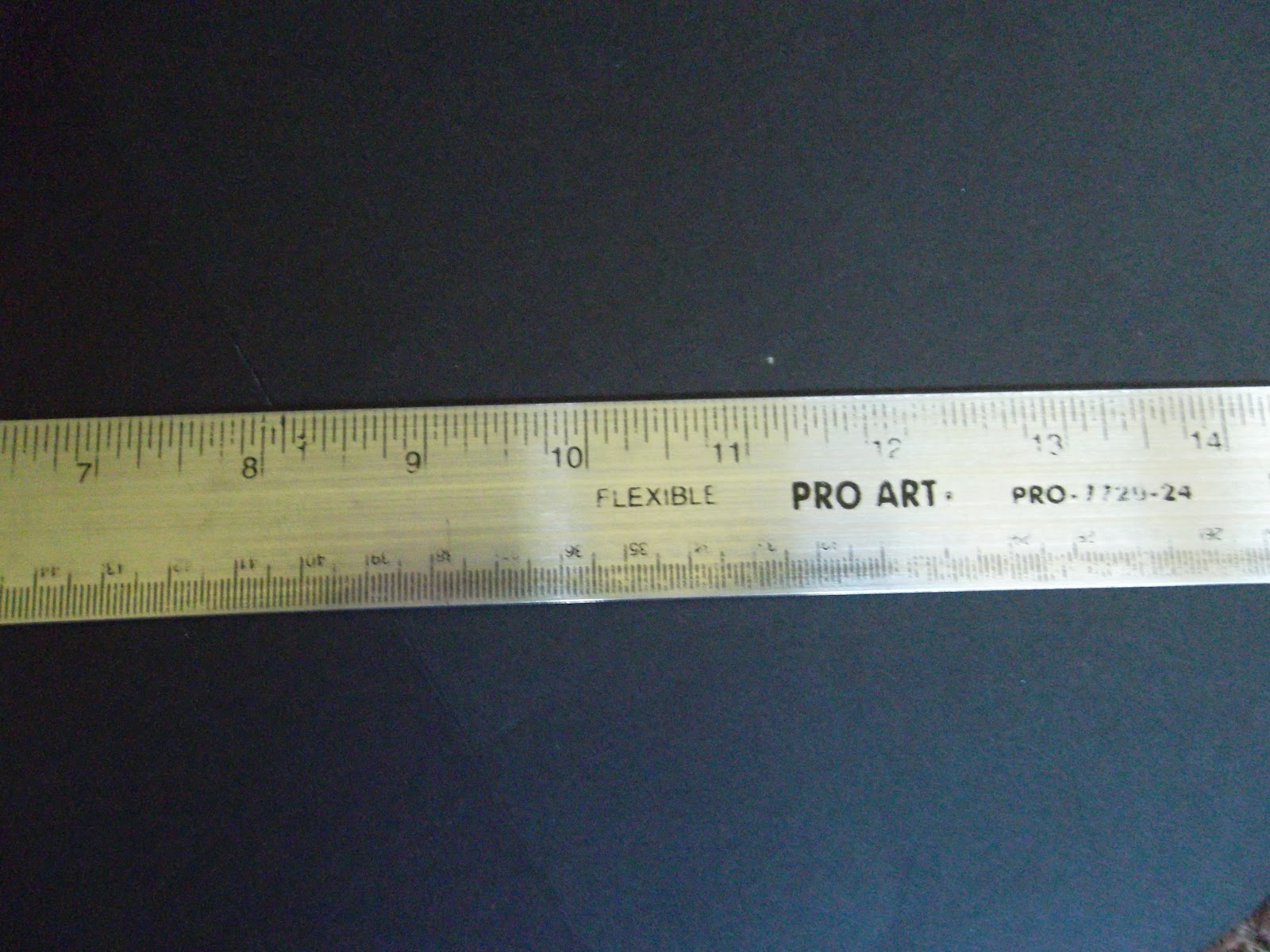

Wednesday, May 23, 2012
Tools of the Trade

Tuesday, May 15, 2012
Tools of the Trade
When you have good brushes, you need to take care of them to keep them in good shape. There are various brush cleaners but I use this kind which was recommended to me.

I used to just use it for oils and I didn't think that I needed it for watercolors, I probably did a fair amount of damage to my brushes doing that, I now use it to clean my brushes whenever I use them, you can't get all the pigment and paint out of your brushes just rinsing them. Anyway, brush cleaner.


I used to just use it for oils and I didn't think that I needed it for watercolors, I probably did a fair amount of damage to my brushes doing that, I now use it to clean my brushes whenever I use them, you can't get all the pigment and paint out of your brushes just rinsing them. Anyway, brush cleaner.

Wednesday, May 9, 2012
Tools of the Trade


Tuesday, May 1, 2012
Tools of the Trade


Tuesday, April 24, 2012
Tools of the Trade

For this Tools of the Trade I have another... tool, for lack of a better term, that I use when I watercolor. Ox Gall. Yes it really is ox gall. I've been told that it tastes terrible (sometimes people stick their brushes in their mouth for various reasons, it's a bad habit it sounds like using ox gall and accidentally sticking your brush in your mouth could forever cure you of that.) I don't know about the taste but I do know that when I dropped the bottle and a bunch spilled out, it didn't smell really good (while it's been contained in the bottle I've never really noticed a smell.).
Anyway ox gall was recommended to me to solve a problem I was having. The problem was the pigment... not being well absorbed into the paper(?) if that makes any sense, anyway the remedy was to add ox gall to the water I use. Usually before I start painting I'll add a drop or two ox gall to the well before I mix up the paint. It's been working well for me and the bottle's lasted a long time (except for dropping and spilling).
Thursday, April 19, 2012
Tools of the Trade
 This week on tool of the trade the second half of my watercolors. Not long after graduating I bought myself some paints of a higher quality than I'd been previously using (Maimari Blu, good but not amazing) and so I turned to Kremer. Kremer mostly does pigments with which one can make their own paint but they do sell a smaller assortment of ready made watercolors. I did consider making my own watercolors but I read or heard that it was a tricky process and decided to postpone that adventure.
Kremer is a German company as well, which is not to say that German is the only way to go, Windsor Newton is an English/British company and their watercolors are rather famous (you just have to make sure that you get the high quality grades).
I've really enjoyed these paints.
Tuesday, April 10, 2012
Tools of the Trade
For this week a look at some of the paints I use. I was fortunate enough to have teachers that taught me the importance of using high quality materials, it makes a fair amount of sense that if you use higher quality materials your end product will also be higher quality. It was a bit hard though as a poor art student to get behind, higher quality materials also usually have a higher price tag. I have seen the difference in materials pay off though.
When I chose materials there's more than just the quality and price to be looked at, one thing I look for is a high quality and trusted brand of paints, usually this means one that's been around for a long time, it also usually means they're in Europe. The last time I was looking to get more color options for watercolor I researched and debated and decided upon Schminke.
Schminke is a German brand that was recommended to me by a trusted teacher.
After deciding on a brand there's still much more to do. I was taught to use single pigment paints/colors and to research how these pigments will interact with one another. I hadn't ever given it any thought but it's important to remember that your paints could have chemical reactions to one another, not explosions but reactions which could effect your colors and thus your paintings. I want my work to be archival and to be long lasting, in a hundred years or more I want my work to look the same or with very little variation. Anyway I when I find a single pigment paint in the color I'm looking for, I find out any information I can about how light fast it is, if it has a toxicity warning etc. After I've looked at what information's available I then consult The Materials and Techniques of Painting by Kurt Wehlte. The book has a section on pigments and for each pigment it gives various names it goes by, the chemical make up, how lightfast etc. it might be, what types of paint (oil, watercolor) the pigment works well in and what pigments you shouldn't use it with.

As a general rule I try to avoid pigments that are or could potentially be toxic but sometimes there's just not a good alternative, in those cases I read the MSDS (medical safety data sheet if I'm not mistaken) and find out how toxic and if it's safer in some mediums. Cadmiums are very toxic pigments due to their heavy metal make up. I do have a tube of cadmium red but I use it sparingly and consider the instructions in the MSDS.
Long winded but that's how I chose paints.
When I chose materials there's more than just the quality and price to be looked at, one thing I look for is a high quality and trusted brand of paints, usually this means one that's been around for a long time, it also usually means they're in Europe. The last time I was looking to get more color options for watercolor I researched and debated and decided upon Schminke.

Schminke is a German brand that was recommended to me by a trusted teacher.
After deciding on a brand there's still much more to do. I was taught to use single pigment paints/colors and to research how these pigments will interact with one another. I hadn't ever given it any thought but it's important to remember that your paints could have chemical reactions to one another, not explosions but reactions which could effect your colors and thus your paintings. I want my work to be archival and to be long lasting, in a hundred years or more I want my work to look the same or with very little variation. Anyway I when I find a single pigment paint in the color I'm looking for, I find out any information I can about how light fast it is, if it has a toxicity warning etc. After I've looked at what information's available I then consult The Materials and Techniques of Painting by Kurt Wehlte. The book has a section on pigments and for each pigment it gives various names it goes by, the chemical make up, how lightfast etc. it might be, what types of paint (oil, watercolor) the pigment works well in and what pigments you shouldn't use it with.

As a general rule I try to avoid pigments that are or could potentially be toxic but sometimes there's just not a good alternative, in those cases I read the MSDS (medical safety data sheet if I'm not mistaken) and find out how toxic and if it's safer in some mediums. Cadmiums are very toxic pigments due to their heavy metal make up. I do have a tube of cadmium red but I use it sparingly and consider the instructions in the MSDS.
Long winded but that's how I chose paints.
Wednesday, April 4, 2012
Tools of the Trade
Pencils are more effective to use when they're sharp, thus a pencil sharpener is an important tool and not all of them are created equally.

I use two pencil sharpeners, this Kum sharpener was recommended to me and I have found it to be a good sharpener, plus it has an extra blade for when the first wears out.

I also use this two holed sharpener which I believe came with a kit of art supplies that I got at some point. It's an alright sharpener and one of the holes is larger which is good for charcoal pencils etc.

I use drawing pencils and colored pencils and in theory I like to sharpen them with separate sharpeners so that I don't end up with colored pencil remains on a colored pencil piece or vice versa.

I use two pencil sharpeners, this Kum sharpener was recommended to me and I have found it to be a good sharpener, plus it has an extra blade for when the first wears out.

I also use this two holed sharpener which I believe came with a kit of art supplies that I got at some point. It's an alright sharpener and one of the holes is larger which is good for charcoal pencils etc.

I use drawing pencils and colored pencils and in theory I like to sharpen them with separate sharpeners so that I don't end up with colored pencil remains on a colored pencil piece or vice versa.
Wednesday, March 28, 2012
Tools of the Trade
In high school I didn't really appreciate too much about my art supplies, I used whatever I had or needed. In my first high school art class we were assigned to do a study off of a drawing/etching/engraving by Albrecht Durer. I worked very hard on the piece and was pleased by the way it turned out. I used three different pens, something you could tell on close inspection. When I took the piece home I proudly displayed it in my room, and then one day some water flooded through the ceiling in my bedroom and among other things, my drawing was ruined. That year for Christmas my parents, who felt bad about what happened, got me a set of micron pens that were waterproof.
Since that time that's pretty much all I've used for my pen and ink needs art wise. They're good pens, come in different tip sizes and they've lasted fairly well. They also claim to be archival although I don't know how accurate that claim it, for now I'm taking them at their word.
I use 05, 03, and 01. The only problem is that they're not great for major shaded areas but I suppose I really should be using something else for major shading anyway.
Since that time that's pretty much all I've used for my pen and ink
 needs art wise. They're good pens, come in different tip sizes and they've lasted fairly well. They also claim to be archival although I don't know how accurate that claim it, for now I'm taking them at their word.
I use 05, 03, and 01. The only problem is that they're not great for major shaded areas but I suppose I really should be using something else for major shading anyway.
Subscribe to:
Posts (Atom)